David Gandy: Eight Photos That Explain His Approach to Tailoring
From the recognition of Light Blue to London fashion appearances, Gandy offers a useful lesson in collars, texture and quietly expressive colour.
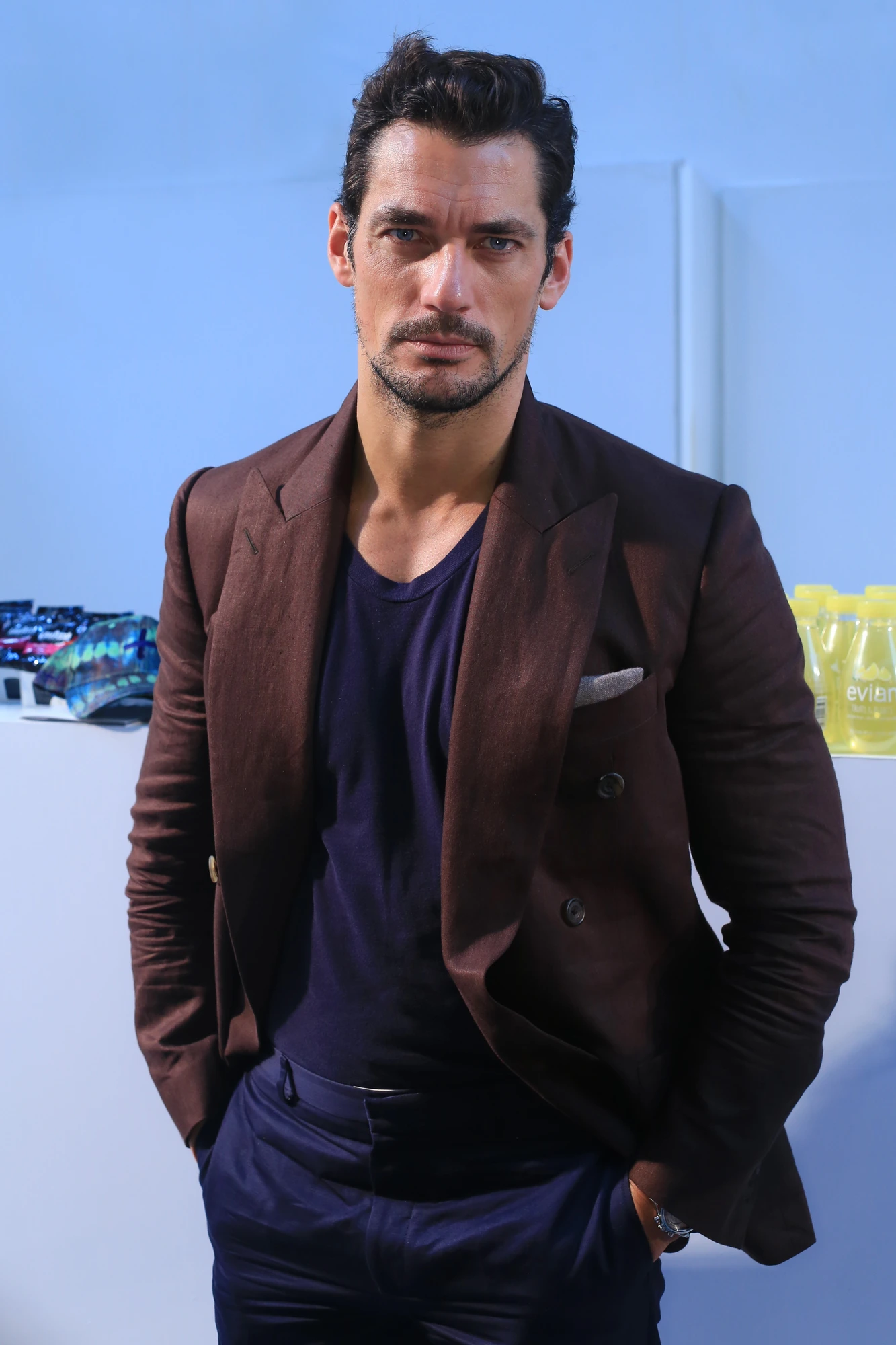 M3 / THE CULTURE EDIT
David Gandy is recognisable through more than a striking face. His public wardrobe gives tailoring a clear shape while leaving room for ease. Dolce & Gabbana’s Light Blue advertising helped establish his public image, but the jackets, shirts and ties he wears away from that seaside setting deserve attention too. These eight archive photographs, taken between 2013 and 2016, form a practical study of menswear, with enough detail to reward a slower look.
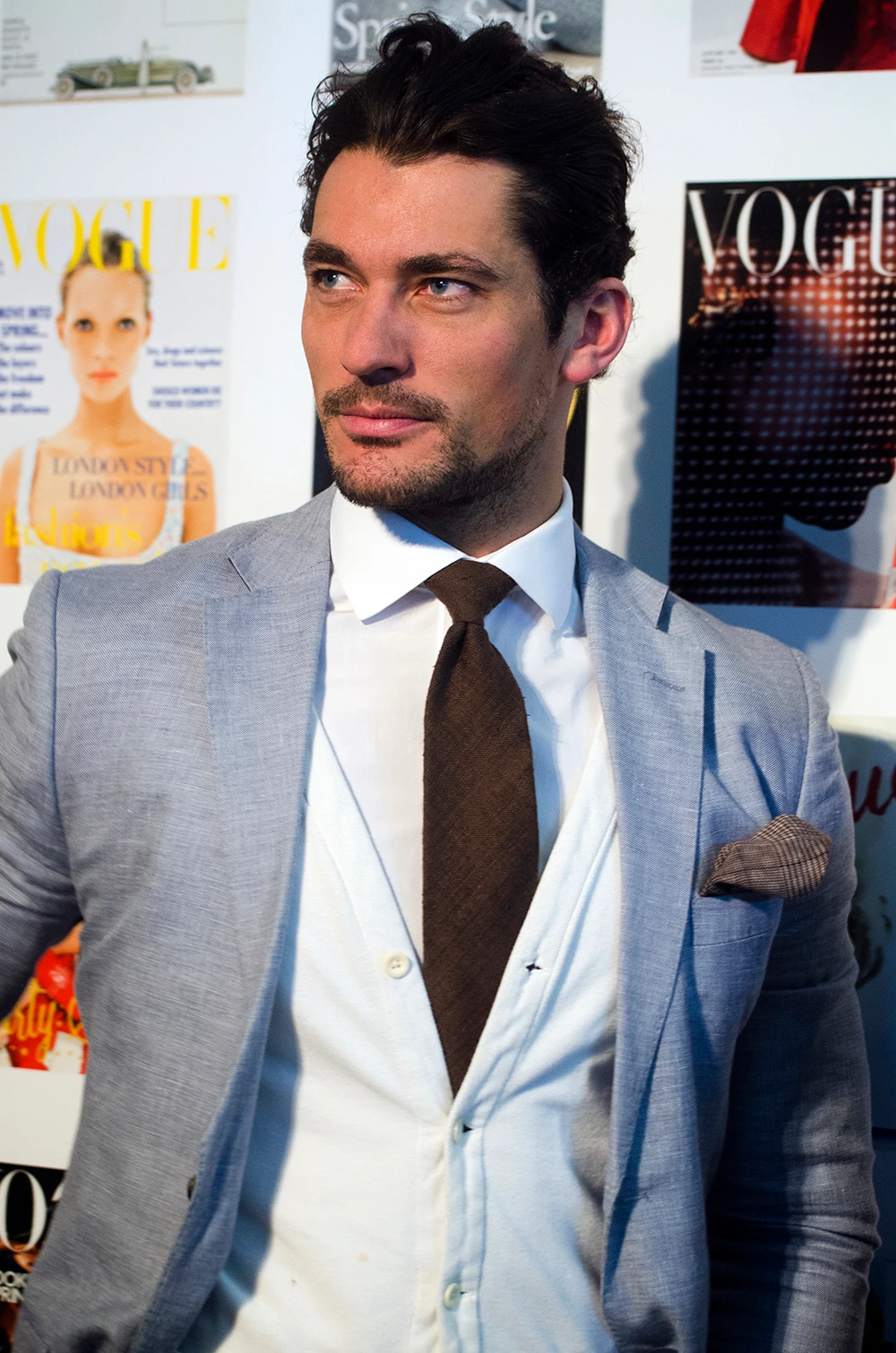
Archive: Vogue Festival, 28 April 2013. A dark tie anchors pale tailoring.
His route into modelling began unexpectedly. In an interview with Coveteur, Gandy recalled friends submitting a video to a televised competition. In a separate 2011 interview with Grazia, he identified Light Blue as the campaign that brought him into the public imagination. Those accounts describe two different career mechanisms: an opportunity to enter the profession, then a memorable commercial image that reached beyond it. His public appearances add another chapter through defined collars, expressive textures and restrained combinations of colour.
Consider the Milan street photograph from 2013. A white shirt creates a bright triangle inside a dark suit, while the tie carries the eye downwards. Snow, cars and people make the surrounding scene busy, yet the face and collar remain distinct. Our reading is that contrast near the neckline does much of the work. An outfit does not need a competing statement at every point to register strongly in a photograph.
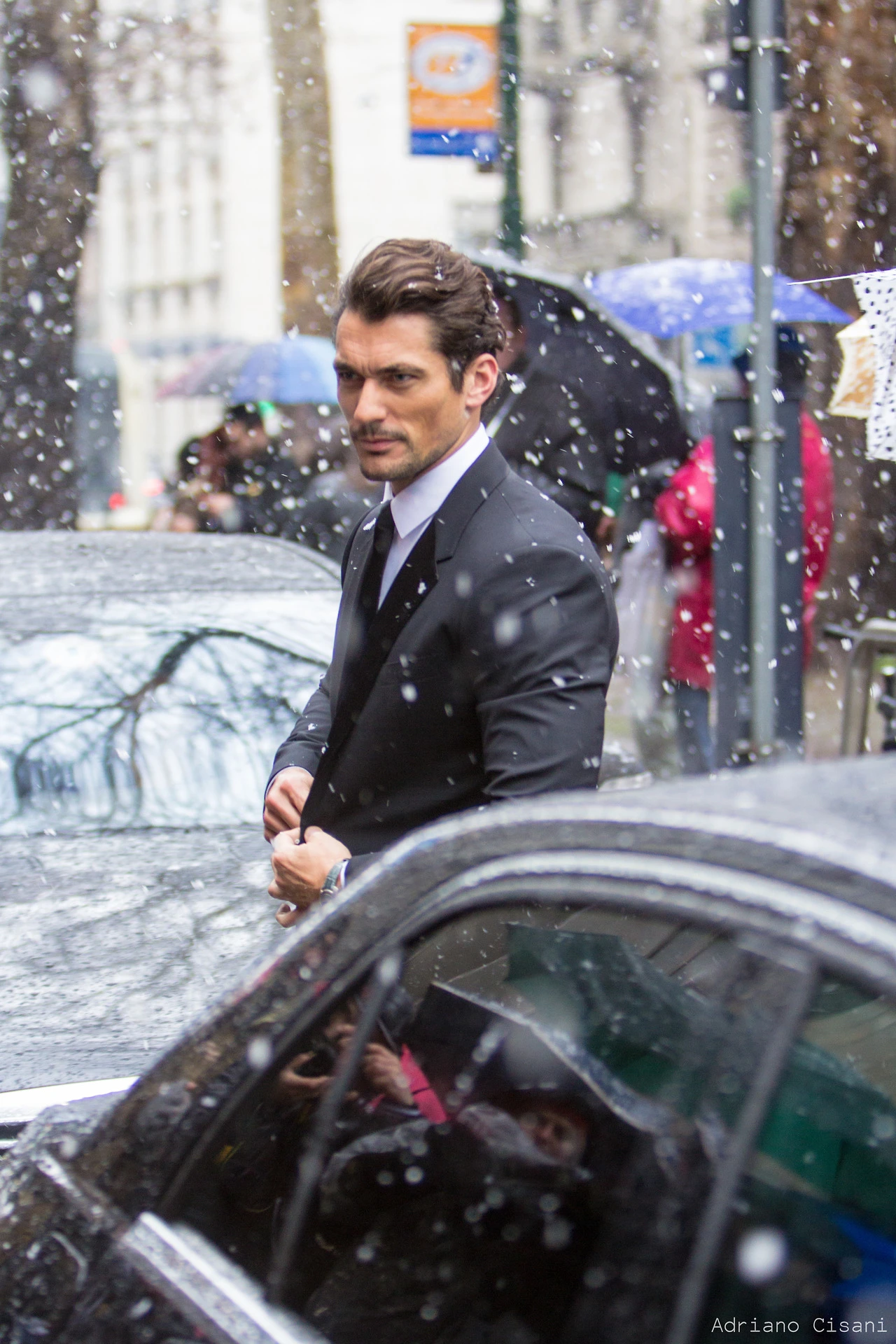
Archive: attending the Dolce & Gabbana show during Milan Fashion Week, 24 February 2013. The photographer’s watermark is retained.
A London street portrait from the same year handles colour differently. Brown-toned double-breasted tailoring meets a pale blue shirt, with small blue dots in the knitted tie connecting the two. The pocket square does not mechanically repeat the tie’s pattern. Coordinated colour and contrasting texture make a more interesting combination than a perfectly matched accessory set. Sunglasses introduce a casual note without changing the underlying structure of the outfit.
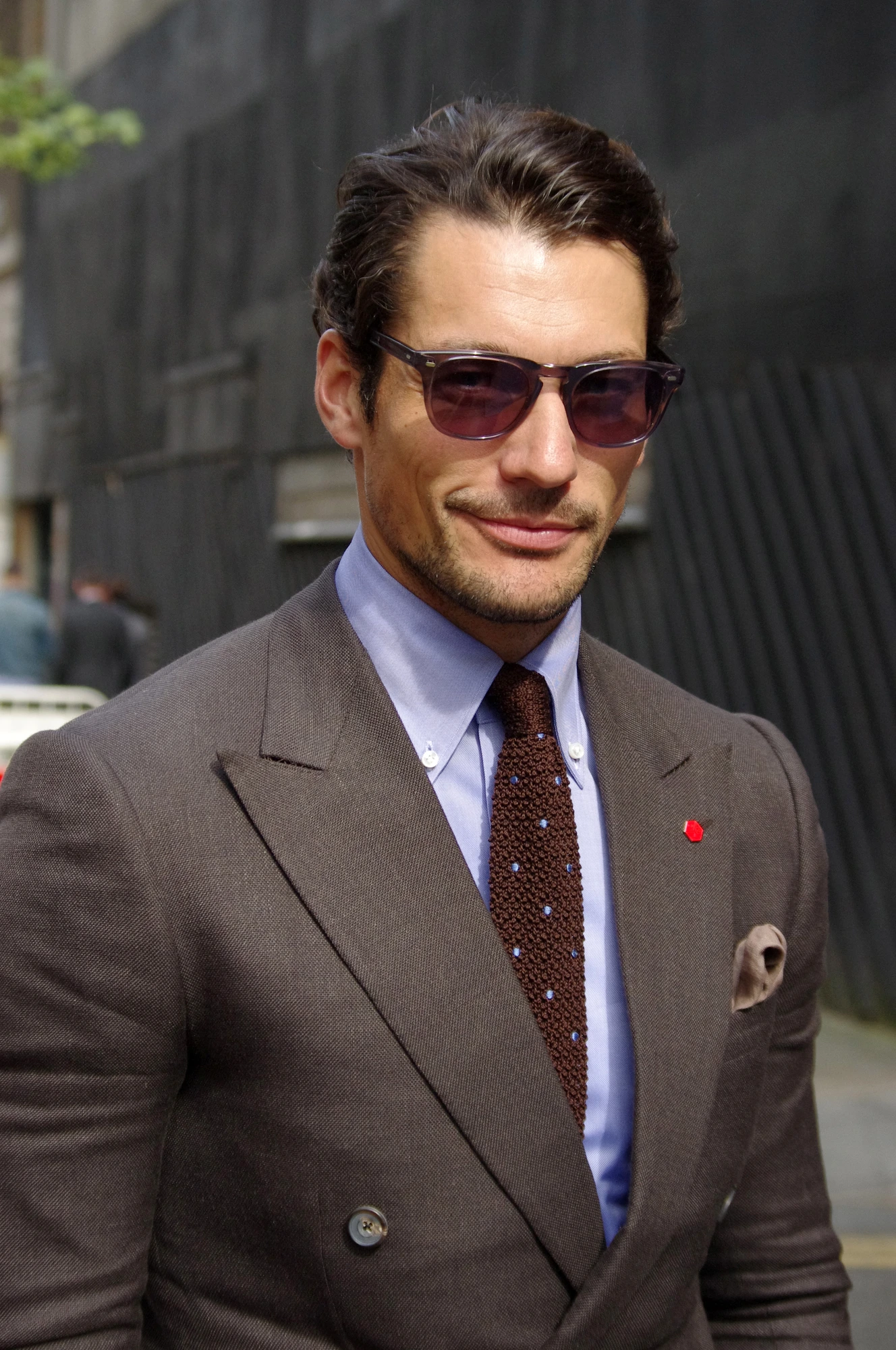
Archive: London Collections: Men street style, June 2013, photographed by Simon McGill.
The 2014 close-up offers a study in smaller details: a striped shirt, a brown tie and a collar pin contribute pattern, solid colour and a little reflected light. The pale jacket keeps the combination from becoming visually heavy. For everyday use, retaining just two of those elements would be enough. The useful question is whether the collar, knot and lapels have room to sit comfortably beside one another.
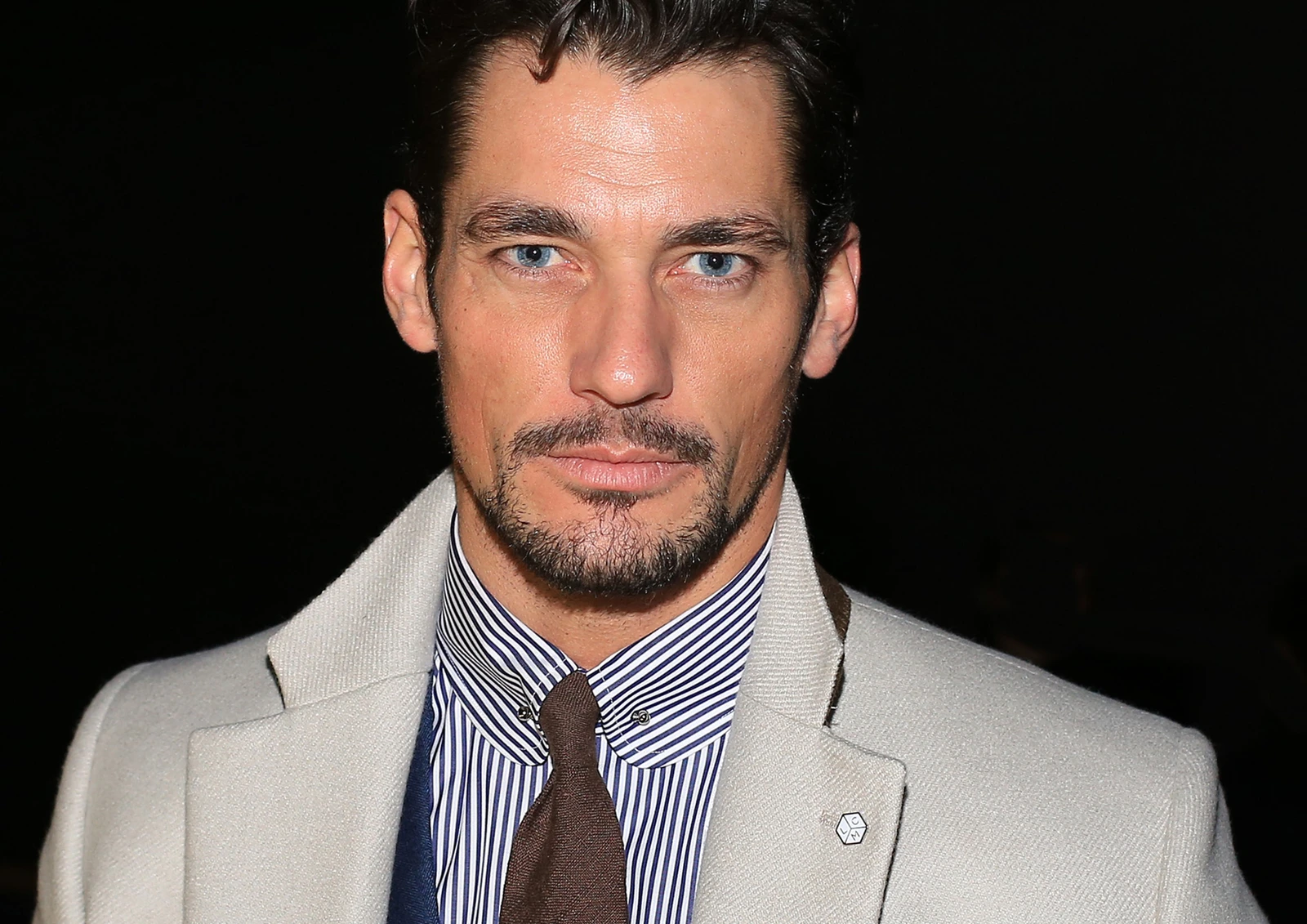
Archive: 7 January 2014, photographed by Walterlan Papetti. The close view reveals the collar details.
In the 2016 photographs, textured grey tailoring, a flat cap and a black inner layer create a softer impression. A close portrait reveals the cloth; a separate seated photograph shows how the trousers connect with brown footwear. Each answers a different question. Together they also remind us that a jacket needs to work when someone sits down, with sufficient room for movement, as well as when they stand for a camera.
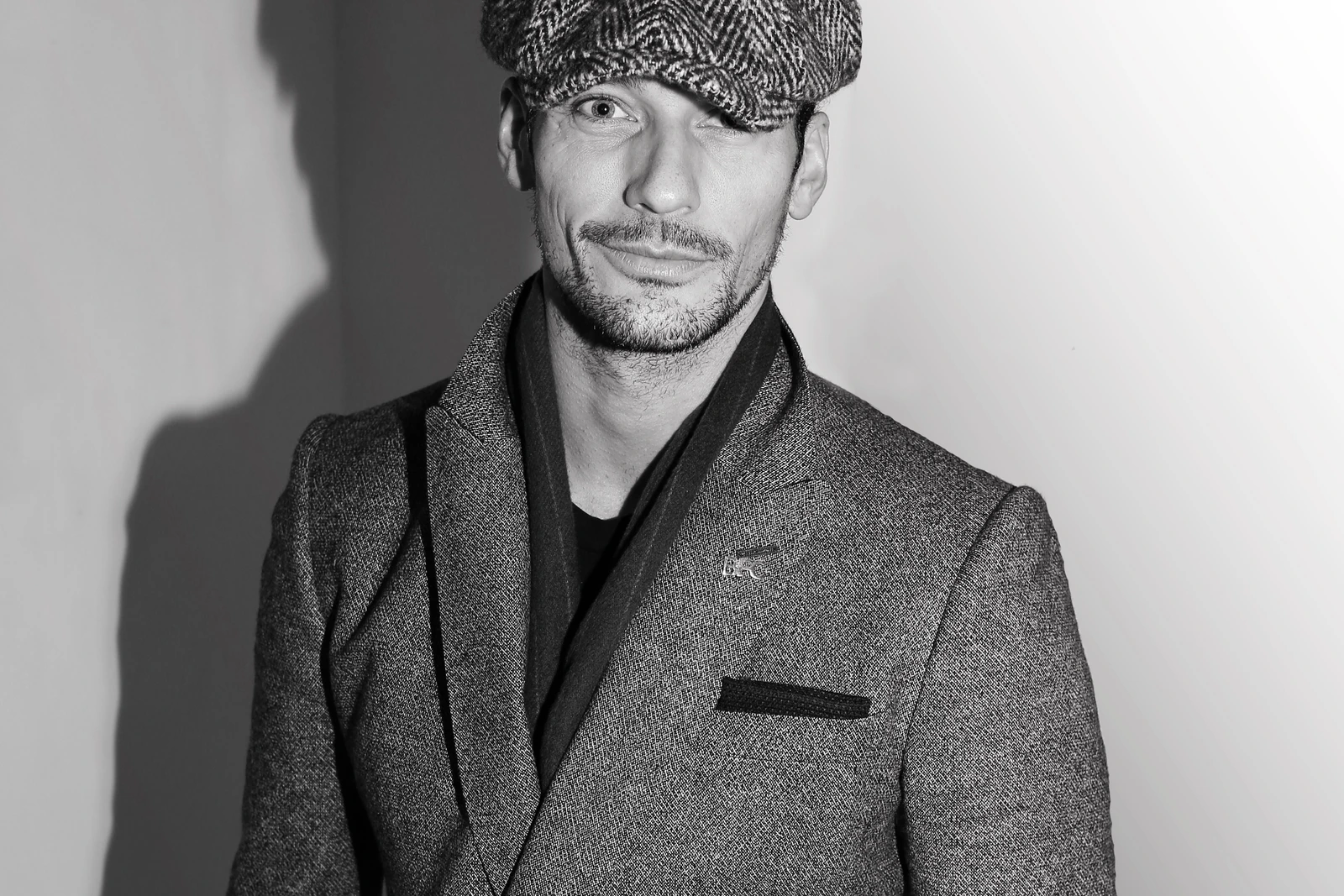
Archive: black-and-white portrait dated 9 January 2016. Textured tailoring meets a black inner layer.
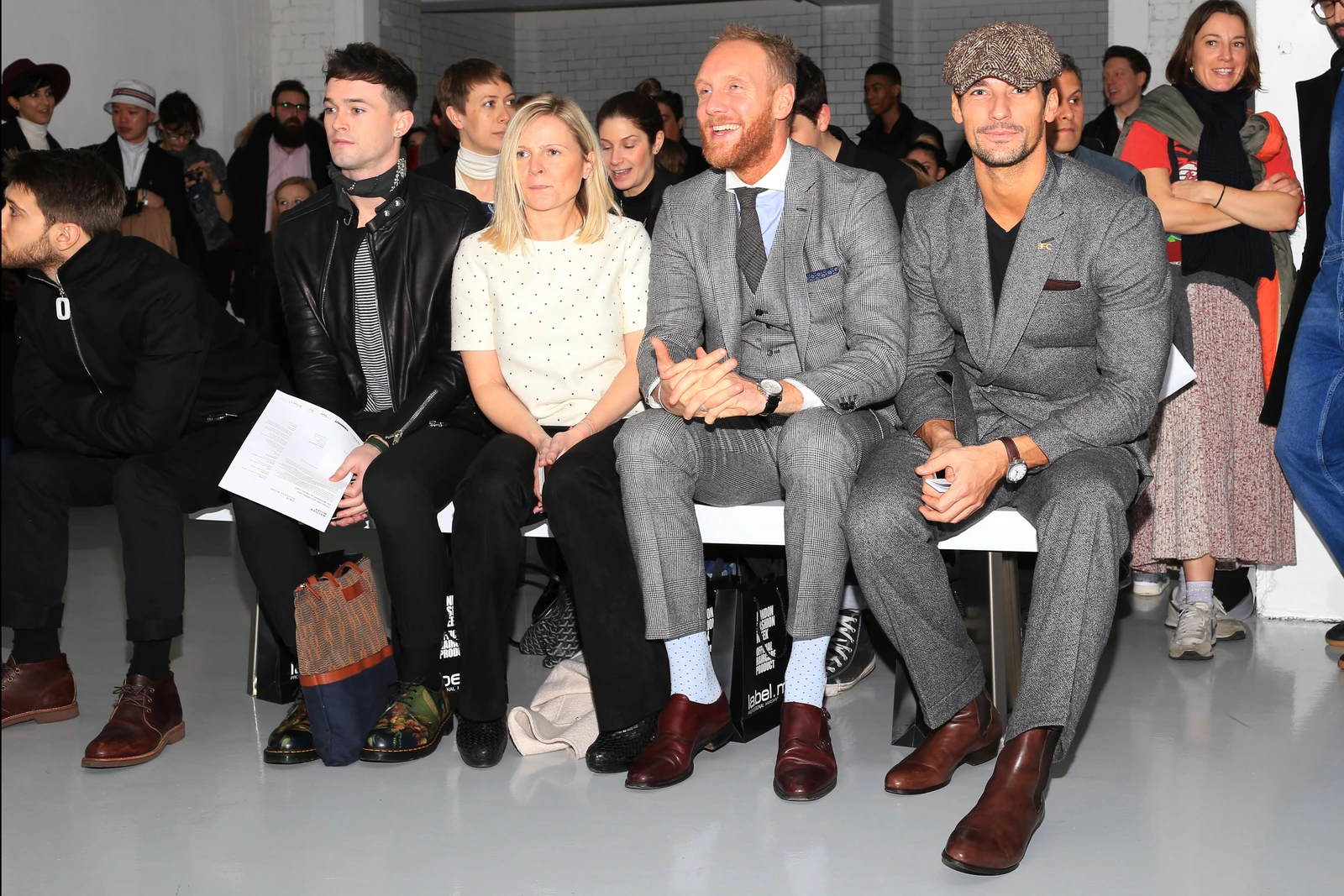
Archive: LCM AW2016, 9 January 2016. Gandy sits on the right; the wider view shows trousers and footwear.
The burgundy-brown jacket and navy top in our cover photograph, alongside an open-neck navy look from Singapore in 2015, suggest another adjustment: reduce accessories around the neck. Start with a jacket and plain top already in your wardrobe, then check the shoulder line, sleeve length and comfort of the opening. Similar tonal depth can make the transition feel natural, without copying the brands, price tags or physique in the picture.
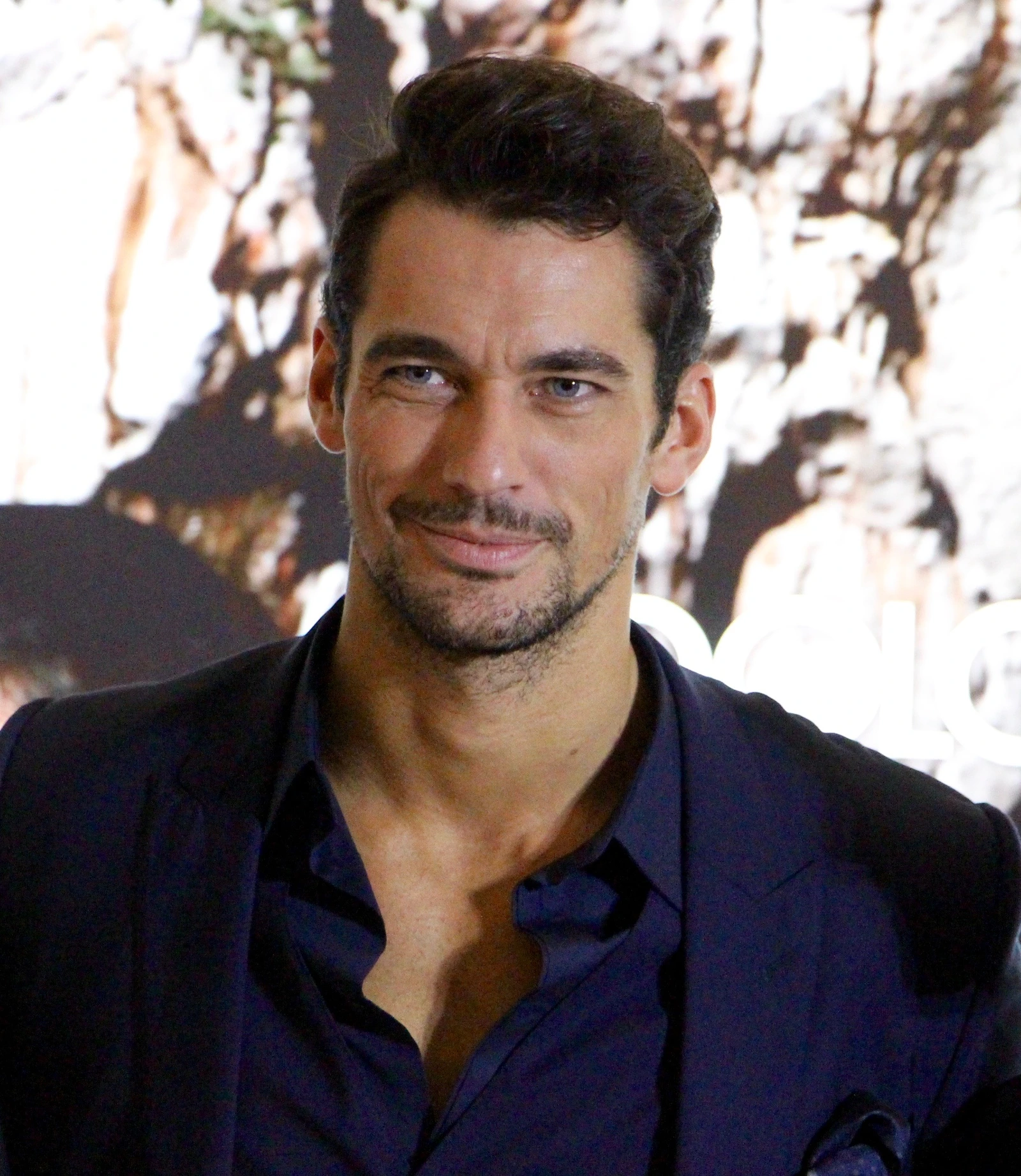
Archive: an appearance at ION mall in Singapore, 18 October 2015.
The recurring lesson is that details support the whole. Brown and blue reappear, collars move between precise and relaxed, and the face remains the visual centre. Precision in a close-up and ease in the overall silhouette can therefore sit comfortably together. Save a close portrait to study texture and a wider image to study proportion. That combination provides a more useful reference than a shopping list of supposed exact matches.
m3.Read a little further
The public sources behind this story.