Yoga, Memory and Healthy Aging: What a 24-Week Study Can Tell Us
Yoga brings movement, breathing and attention together. A small study explores a practice with added cues, opening a useful discussion about memory tests, everyday function and what healthy aging means.
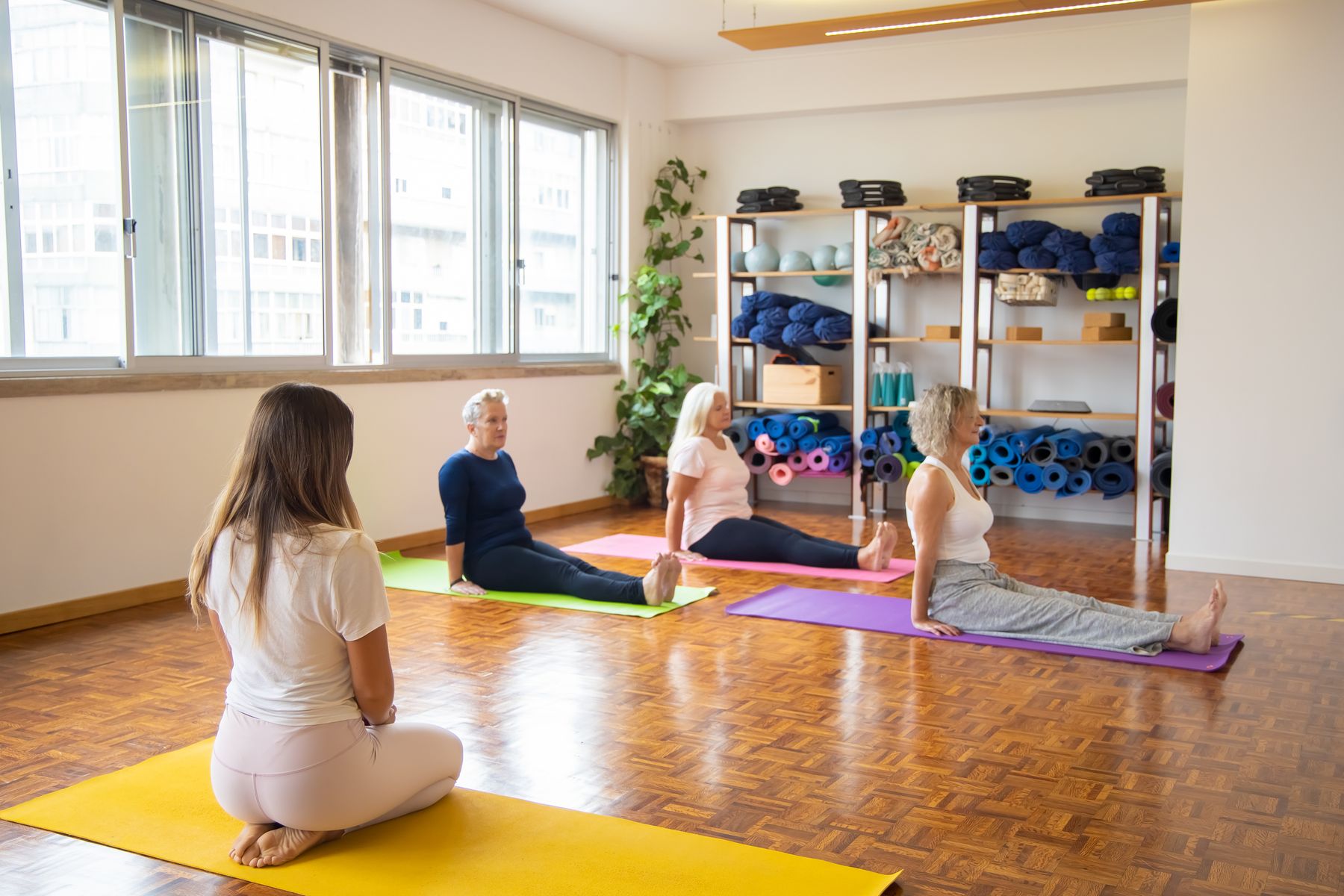
Yoga brings postures, breathing and attention into the same practice. Rooted in India, it now includes many class formats: seated breathing, slowly held standing positions and continuous movement sequences. NCCIH emphasizes that styles differ substantially in their physical demands and content. One useful way into the healthy-aging discussion is to examine a specific variation: what happens when a class adds signals that participants have to remember and respond to?
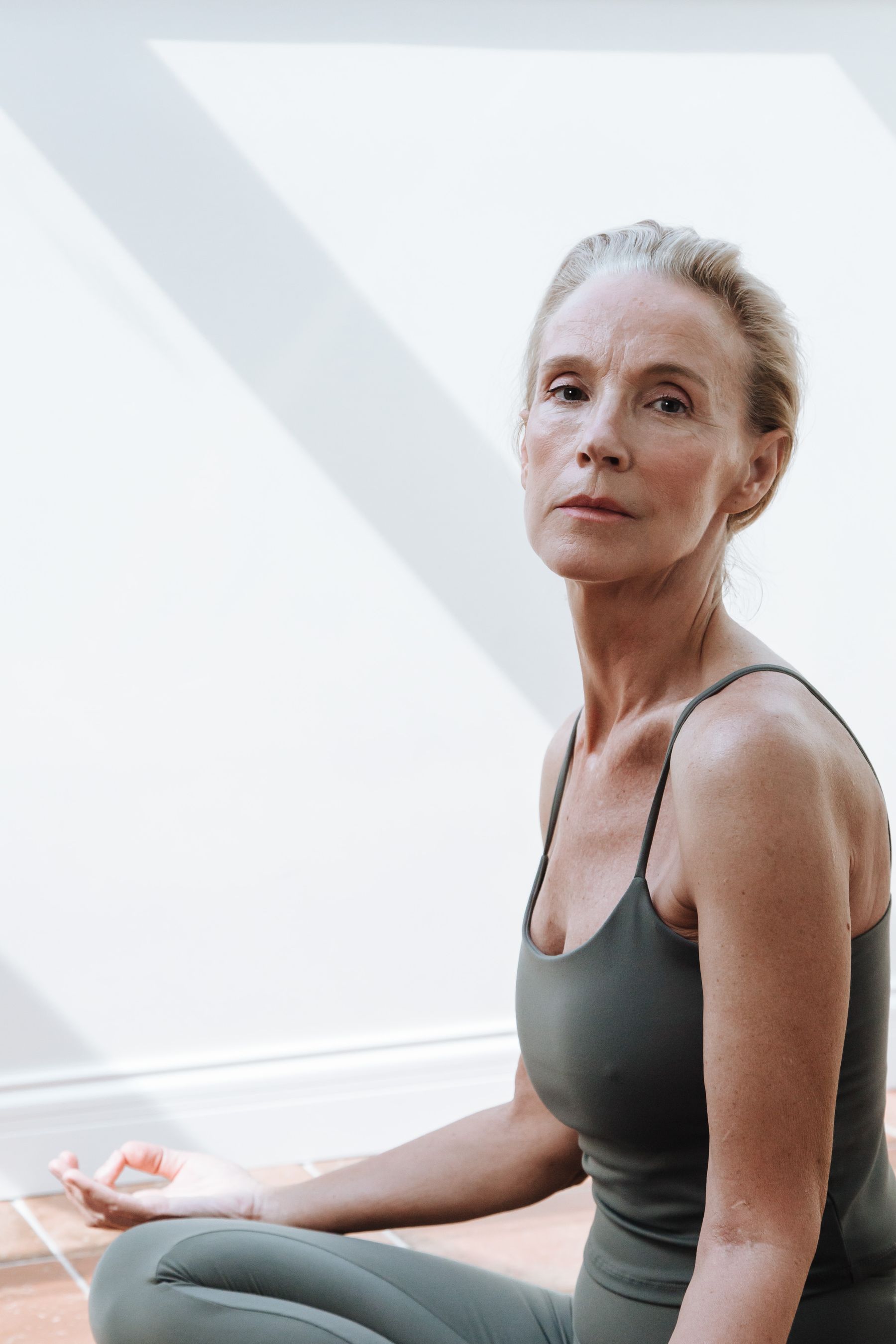
June 2021 archive illustration: a seated posture and hand detail. Not a trial participant.
How YogaCue adds signals to movement
The University of Miami’s YogaCue project added colored paddles and, later, a gong prompting a switch to a paired movement sequence. Its Hatha comparator used slower, controlled movement. The trial registry describes three one-hour sessions each week for 24 weeks, totaling 72 sessions in both groups. That is a sustained, organized program. It addresses a different question from how someone feels after a few minutes of stretching on a single day.
What counted as memory? The registered Hopkins Verbal Learning Test involved hearing 12 words, repeating them immediately and recalling them again after 20–25 minutes. Another task involved recognizing old words in a mixed list. Physical assessments included distance walked in six minutes and the time needed to rise from a chair, walk around a marker three meters away and return to sitting. Remembering information and completing a movement task are distinct outcomes.
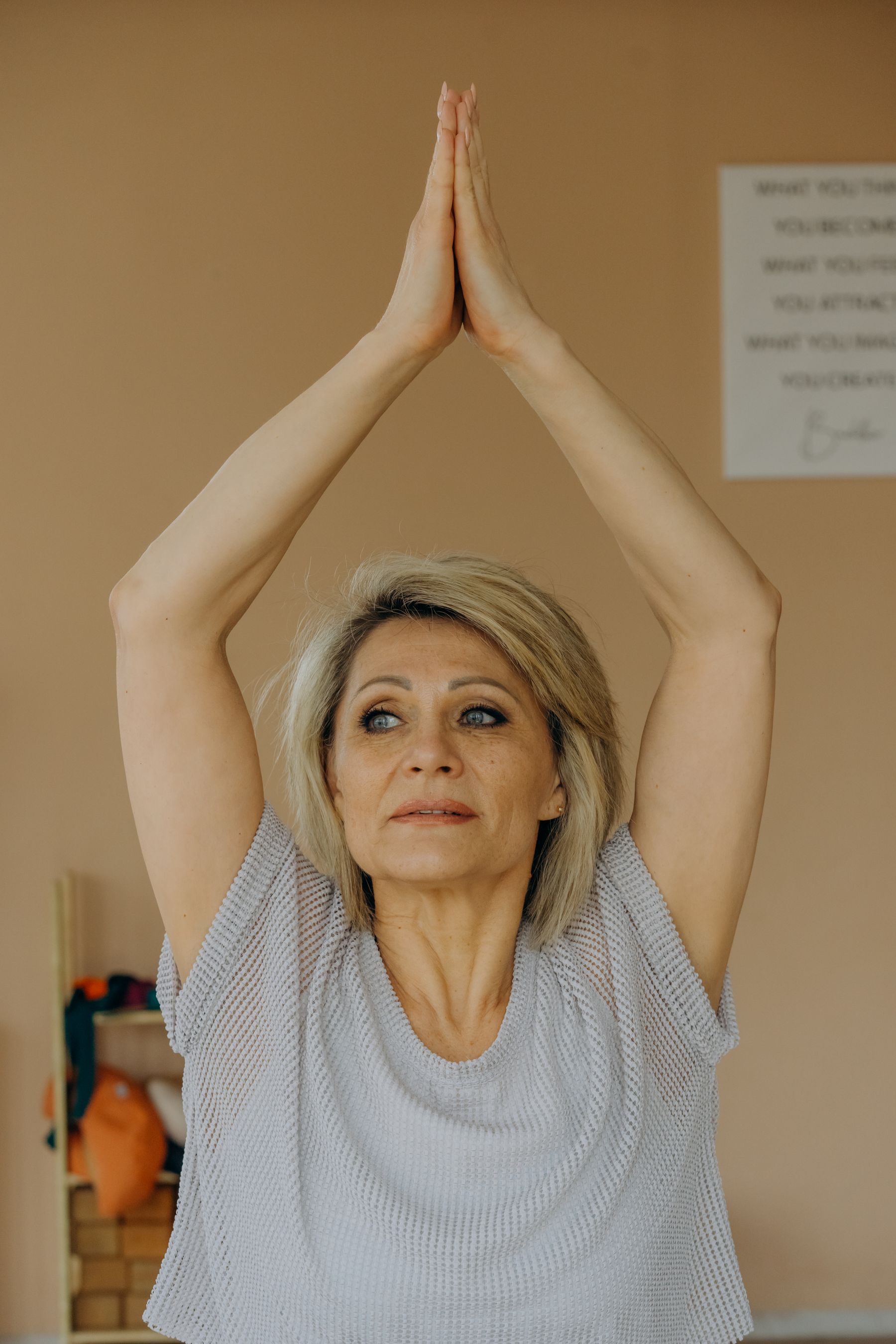
March 2021 archive illustration: an overhead arm position. Not a trial participant.
What the results can tell us
The analysis published in Scientific Reports on September 3, 2026 included 34 people, 17 per group. Both groups improved on some cognitive and physical measures; YogaCue showed signals on selected verbal-memory scores. The small sample and absence of a non-exercising comparator limit conclusions: dementia prevention or age reversal was not established. Nor does a significant improvement within one group automatically establish superiority; that requires directly comparing the groups.
A separate trial asked a concrete question about knee pain. Published in JAMA Network Open on April 8, 2025, it compared yoga with strengthening exercise in 117 people with knee osteoarthritis. During the first 12 weeks, each group had two supervised sessions and one home session weekly. Both improved in knee pain, without a significant difference on the primary outcome. Frequency, supervision and the population belong in the interpretation: this concerns pain management, not memory.
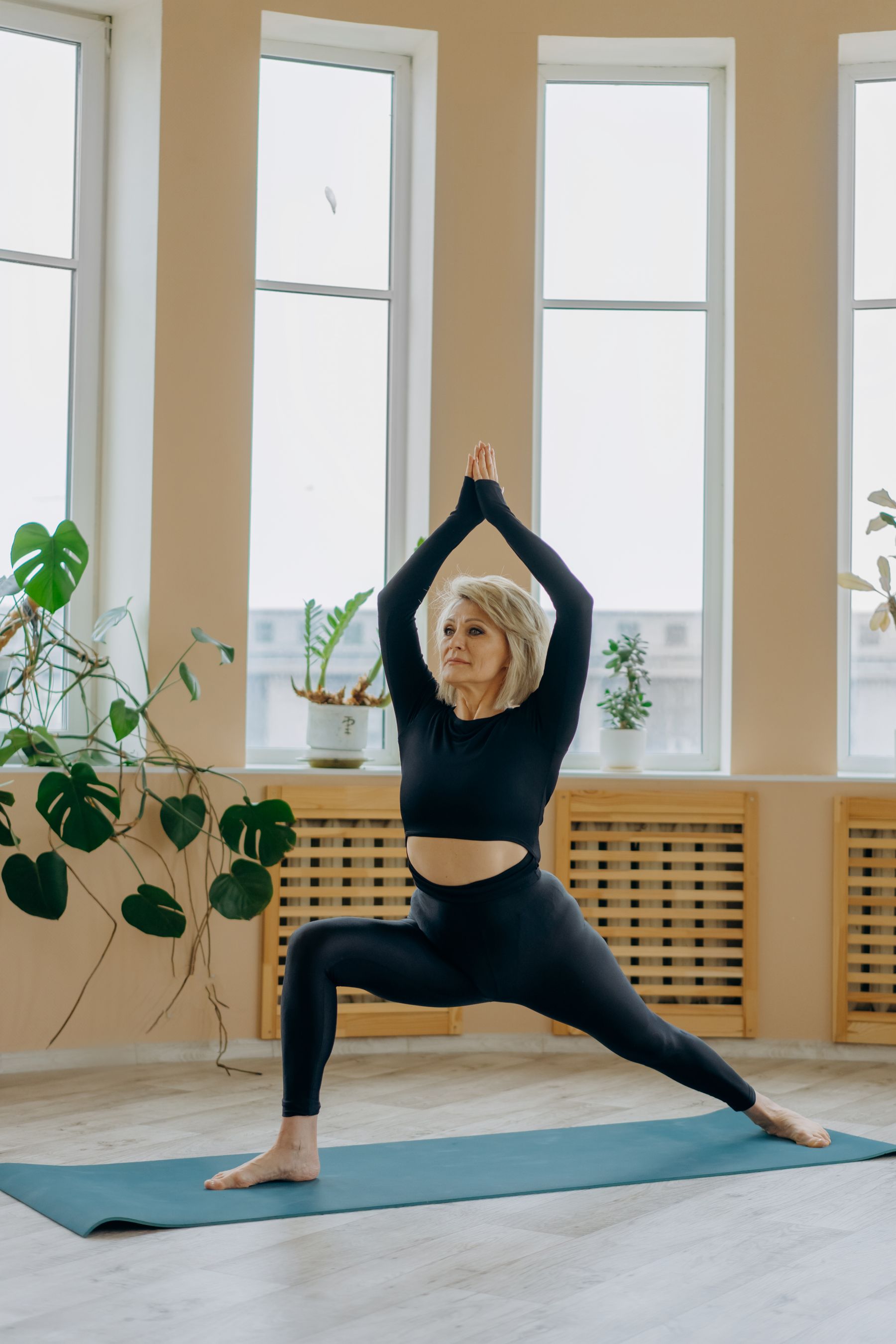
March 2021 archive illustration: a full standing posture and foot placement. Not a trial participant.
Understand a class through everyday goals
Healthy aging can also be described through more tangible goals. The World Health Organization emphasizes that people of similar ages may have very different physical and mental capacities, while their surroundings influence what they can do. Walking, getting up, caring for oneself and continuing enjoyable activities bring the discussion closer to everyday life. Someone exploring yoga can start by identifying an interest in relaxation, movement or participating in a group, then examine the class content.
Several details make a class description more useful: is it mainly seated or standing? Are transitions slow or continuous? Does the instructor lead through spoken directions, demonstrations or remembered sequences? Can newcomers adapt movements? NCCIH recommends qualified instruction and discussion of necessary adaptations with healthcare professionals and instructors for older adults or people with health conditions. Pace is one feature; understandable cues, appropriate difficulty and specific guidance also deserve attention.
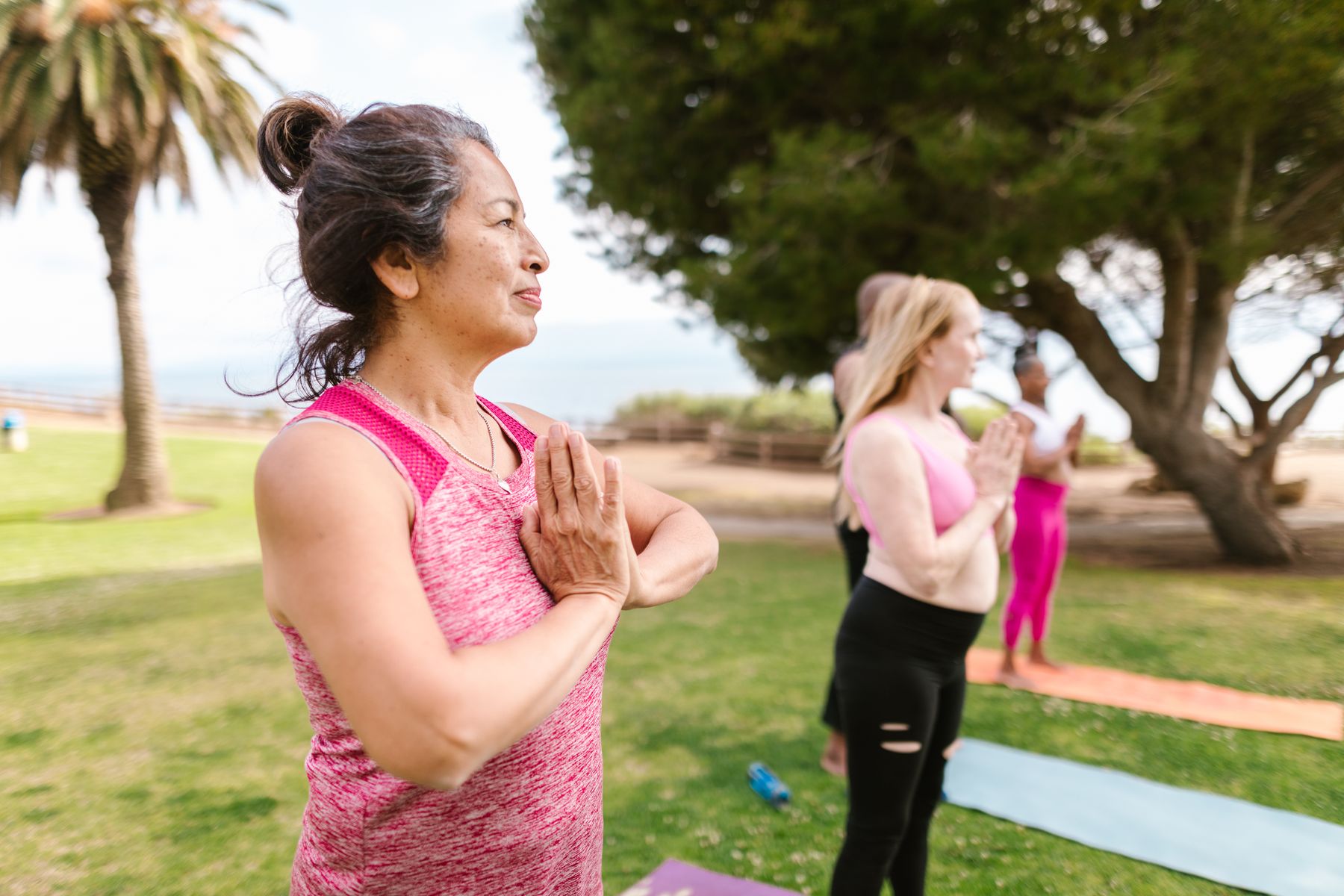
Archive illustration published June 2021: group practice in a park. Not trial participants.
The photographs make different settings visible: a seated portrait emphasizes attention, raised arms show an upper-body position, a full standing view reveals foot placement, and an outdoor group presents another practice space. They are real archive illustrations from 2020–2021, not trial scenes. We see the study as a specific exploration of combining movement with learning tasks. Larger and longer studies can clarify how changes carry into everyday life.
m3.Read a little further
The public sources behind this story.
- 01Scientific Reports: YogaCue and Hatha yoga randomized study3 Sept 2026
- 02ClinicalTrials.gov NCT06099405: University of Miami protocol, class schedules and outcome measures30 May 2025
- 03NCCIH: Yoga—Effectiveness and Safety (updated August 2023; checked October 23, 2026)
- 04JAMA Network Open: Yoga or Strengthening Exercise for Knee Osteoarthritis8 Apr 2025
- 05WHO: Ageing and health1 Oct 2025
- 06Gelman and Stern: Interpreting differences in statistical significance (The American Statistician, November 2006)